CFCM Daily Radar — Galectin-9, AI-Designed CAR-T and Immune Monitoring
Galectin-9 and early AML relapse lead the 12 October radar, alongside AI-designed CAR-T screening, age-dependent immune phenotypes and pre-transplant lymphocyte biomarkers.
Published 12 October 2026. CFCM editorial selection; investigational biomarkers and validation limits are labelled explicitly.
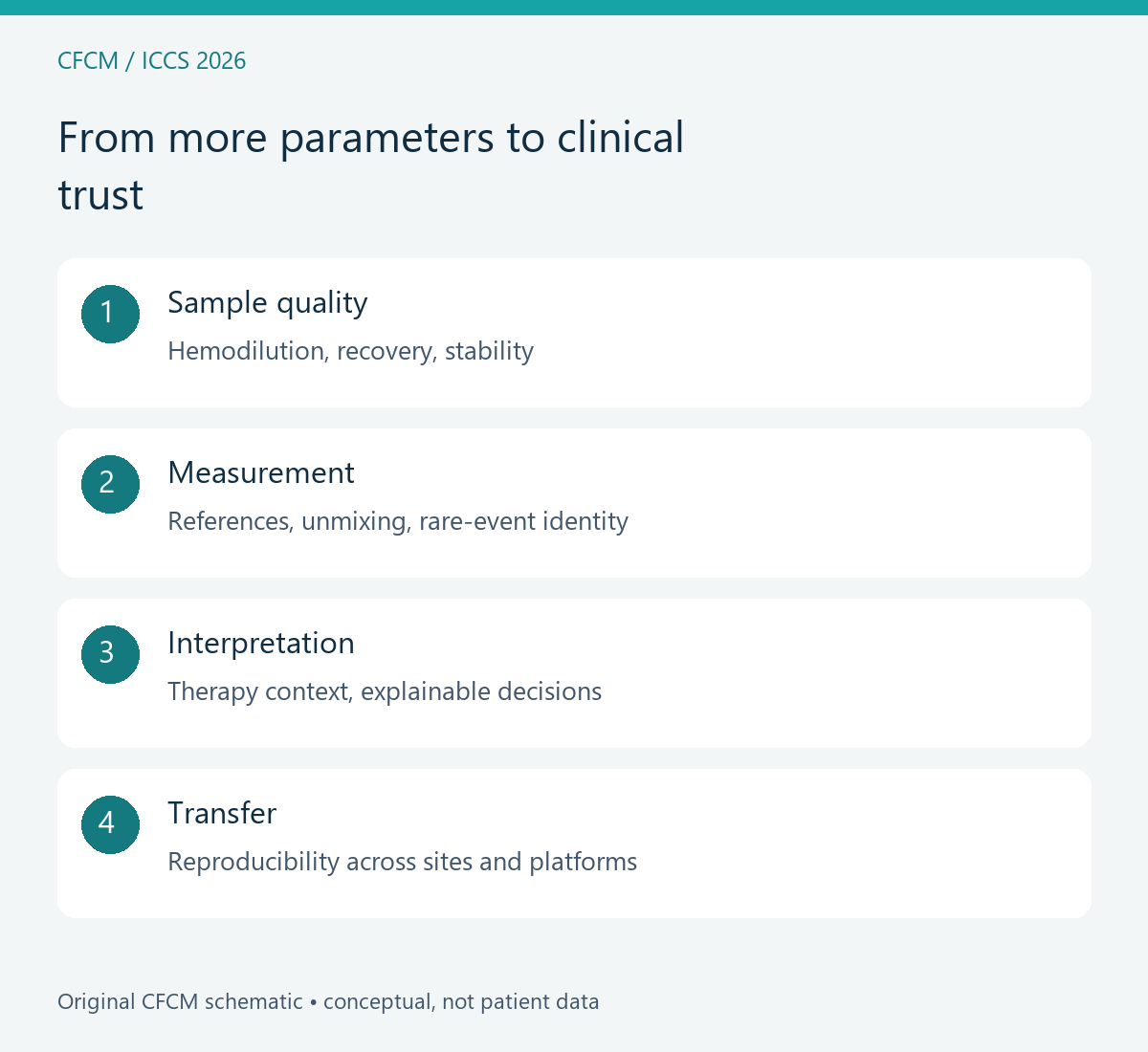
Paper of the Day — Monocyte Galectin-9 and early AML relapse after haploidentical transplant
Peer-reviewed original research
Weiqian Dai, Xueying Zhao, Linjie Wu, Aiming Pang and colleagues. Monocyte Galectin-9 is associated with CD8⁺ T-cell dysfunction and early relapse after haploidentical hematopoietic stem cell transplantation. Biomarker Research. Published 7 October 2026. DOI: 10.1186/s40364-026-01010-1.
The study examined immune reconstitution after haploidentical transplantation in AML. Increased monocyte surface Galectin-9 was observed in patients who later relapsed, including early post-transplant measurements. The investigators also reported CD8⁺ T-cell dysfunction-associated phenotypes and partial functional restoration after TIM-3 pathway inhibition in experimental systems.
Why it matters to CFCM: flow cytometry may provide clinically relevant information about the immune environment as well as residual leukaemia. However, Galectin-9 remains investigational: the study does not establish a validated clinical threshold or prospective relapse-prediction assay.
Daily Learning Pill — T-cell recovery is not the same as T-cell function
A recovering CD8⁺ T-cell count does not prove effective antileukaemic immunity. Inhibitory receptors and activation/exhaustion-associated phenotypes need functional context because markers such as TIM-3 or PD-1 can appear during both activation and dysfunction.
Academy reuse: Immunomonitoring → Enumeration versus Functional Immunity.
Technology Radar — 12,000 AI-designed CAR-T binders put through biological testing
Peer-reviewed original experimental research
Clayton W. Kosonocky, Alex M. Abel, Aaron L. Feller and colleagues. Validation and analysis of 12,000 AI-driven CAR-T designs in the Bits to Binders competition. Molecular Systems Biology. Published 8 October 2026. DOI: 10.1038/s44320-026-00246-1.
The study experimentally screened 12,000 computationally designed CD20-binding minibinders. Hundreds produced significant CD20-dependent proliferation, but only a subset of leading candidates demonstrated strong target-cell killing when individually tested.
Why it matters to CFCM: computational plausibility, binding, proliferation and cytotoxicity are distinct endpoints. The study is a useful model for how AI-generated biological designs require experimental validation rather than headline model performance alone.
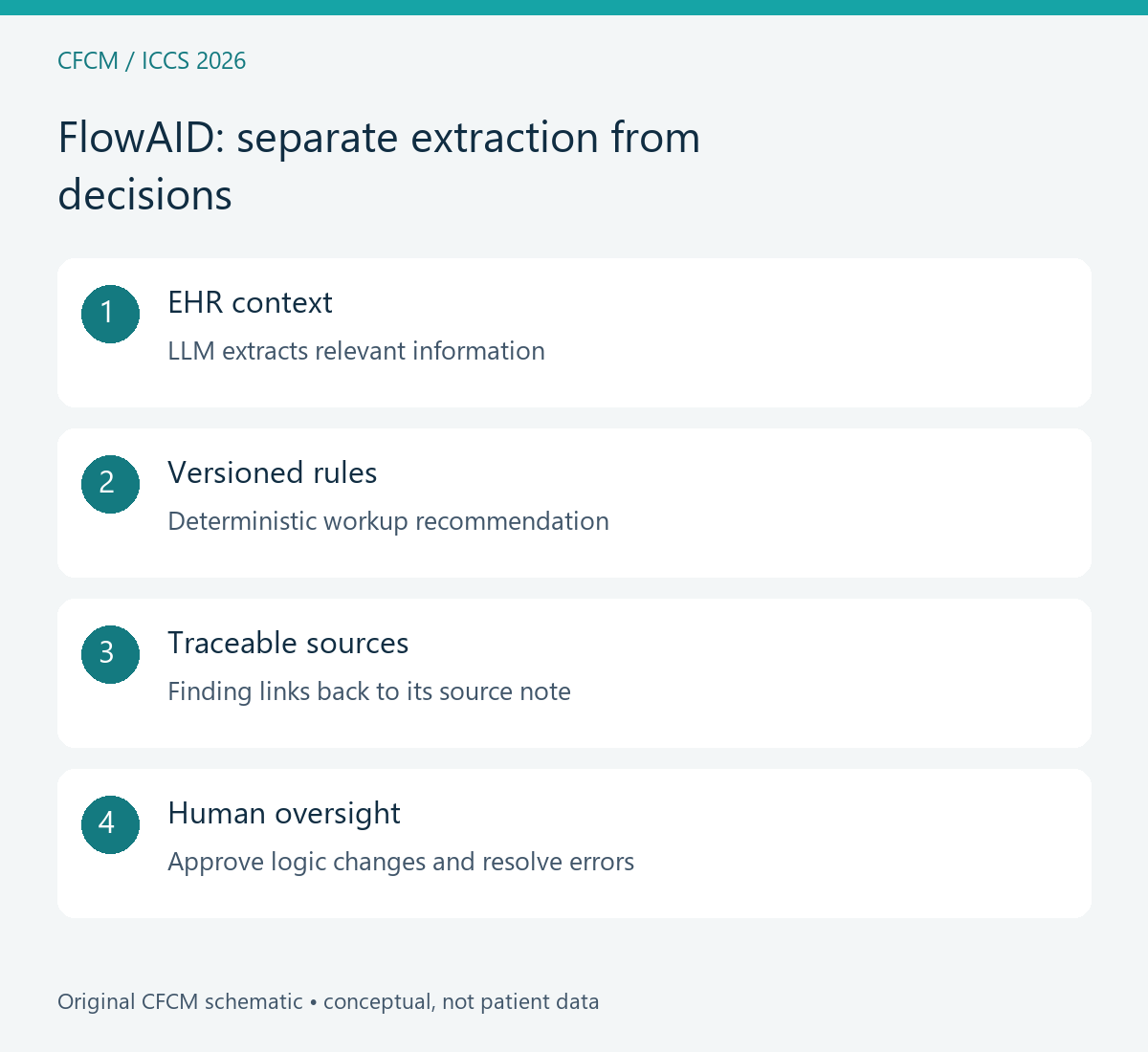
Clinical reference populations — Age remodels normal immune phenotypes
Peer-reviewed original research
Age-associated remodeling of NK cell subsets, B cell subsets, and T cell surface markers in peripheral blood of healthy Chinese adults: a prospective multicolor flow cytometry study. Frontiers in Aging. Published 9 October 2026. DOI: 10.3389/fragi.2026.1847033.
The study of 146 healthy adults identified age-associated shifts in T-, B- and NK-cell phenotypes, including increasing CD57 expression and changes in NK subsets. These findings reinforce that reference populations are not biologically static.
CFCM placement: Academy → Reference Intervals and Immunophenotyping; Resources → Clinical Reference Studies.
Transplantation — Pre-transplant marrow lymphocyte subsets and outcome
Peer-reviewed retrospective clinical study
Pre-transplant bone marrow lymphocyte subsets predict outcome after allogeneic stem cell transplantation. Frontiers in Immunology. Published 2 October 2026. DOI: 10.3389/fimmu.2026.1910059.
In 140 adults, pre-transplant lymphocyte distributions were associated with outcomes including CMV infection and graft-versus-host disease. These associations are hypothesis-generating and require external validation before clinical thresholds are adopted.
CFCM placement: News → Transplantation; Academy → Clinical Immunophenotyping.
Editorial decision
Galectin-9 is the featured scientific item because it connects clinical flow cytometry, immune dysfunction and AML relapse. The AI-designed CAR-T study is the strongest Technology Radar item. Age-dependent immunophenotypes and pre-transplant lymphocyte subsets belong primarily in Academy and clinical education.
Evidence note
Galectin-9 is presented as an investigational biomarker, not a validated clinical predictor. AI-designed CAR-T candidates are discussed as experimental designs requiring functional validation, not as clinical products.
About the author
Juan Manuel Ojeda — Founder & Editor, CFCMProfessional background includes Sysmex, Newcastle University and the NHS. CFCM is Juan Manuel Ojeda's independent editorial project and represents the author alone. Manufacturer references do not imply endorsement. Relevant professional or financial relationships are disclosed alongside the affected coverage.
Related: validation and analysis resources →Clinical Notes →Published 12 October 2026. CFCM source checking and editorial qualification are not independent scientific review.