Analysis
AI & Data
FlowCAP Benchmarks: Population Matching and Sample Classification Are Different Tests
The first FlowCAP challenges evaluated both event-level population identification and sample classification. Read the task and reference process before transferring a benchmark claim.
A strong score needs a clearly named question
An algorithm may reproduce a manually defined population or assign a specimen to a category. Those outcomes have different units of evaluation and different consequences when they are wrong. A benchmark description should state which question its score answers.
What the first FlowCAP challenges tested
Aghaeepour and colleagues' 2013 Nature Methods paper evaluated population identification and sample classification as distinct tasks. Population comparisons used expert manual gating as a reference. The work also examined multiple manual interpretations and used external sample labels for classification challenges.
The study illustrates that performance depends on the dataset, task and reference. It is historical benchmarking evidence, not a prospective validation of a new clinical workflow. No publisher figure or dataset is reproduced here; the conceptual checklist is original.
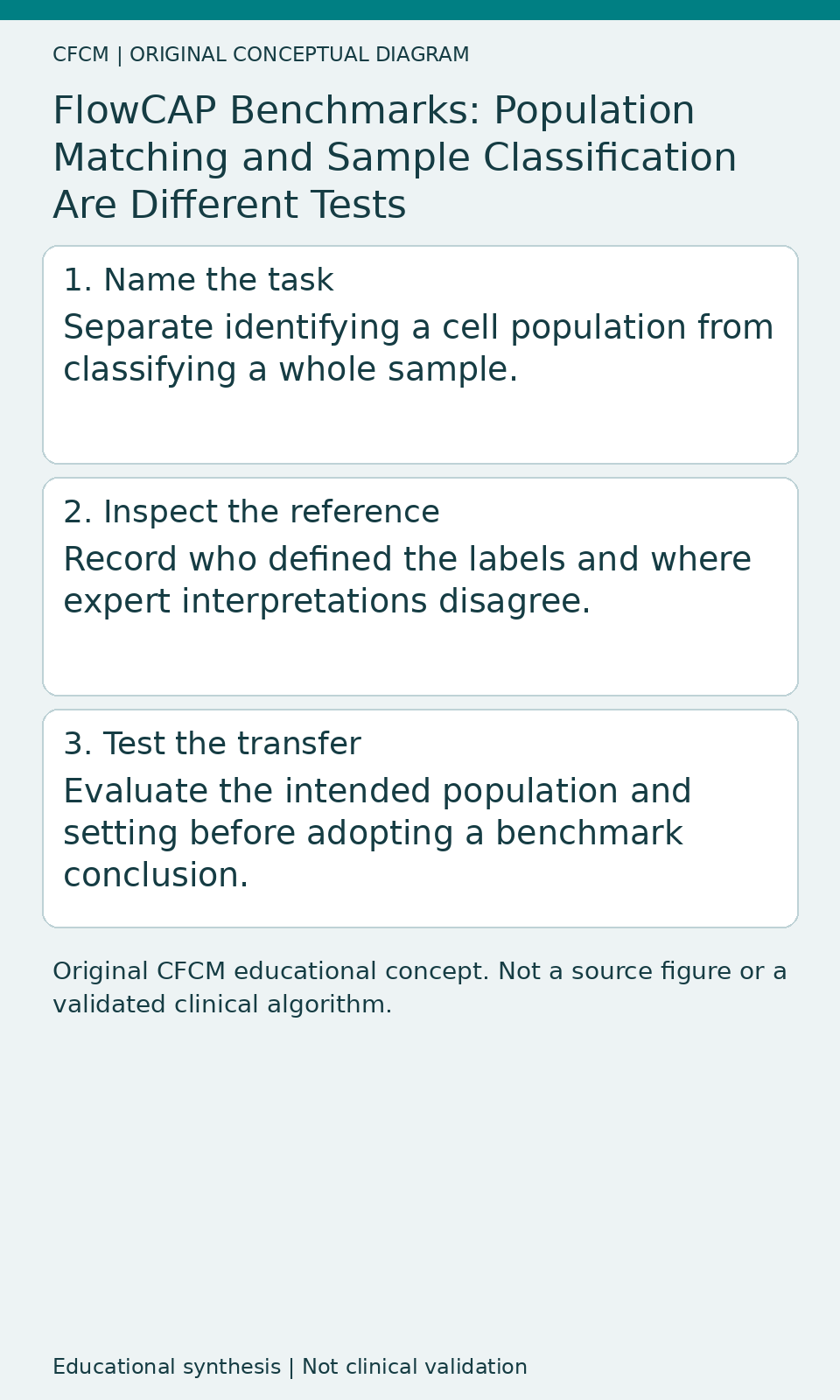
Write the unit of success before choosing a metric
For a local appraisal, describe whether success means selecting the intended events, estimating a population frequency or making a specimen-level classification. Specify the denominator for each metric and identify errors that an average result could conceal.
For example, a specimen can be classified correctly despite an imperfect population boundary, while a good match on common cells may leave the clinically important rare population unresolved. These are conceptual examples rather than reported outcomes from a new experiment. Keep the claim aligned with the actual evaluation unit.
The reference process is part of the evidence
When experts disagree, retain the disagreement and explain how a comparison label was defined. Consensus is a useful reference procedure, but the process used to create it should remain visible. Do not remove an inconvenient interpretation simply because it lowers a score after results are known.
Before transferring an approach, examine the intended specimen types, panel, preparation and decision being supported. Separate the data used to develop settings from the data used to assess them. No local acceptance threshold, diagnostic sensitivity or clinical performance estimate is established by this article.
Daily Learning Pill
Read the benchmark task before the headline score. Event membership and specimen classification need their own evidence.
Continue with CFCM evidence and Academy. Original ChatGPT/Codex educational analysis, without independent scientific review or clinical certification.